Dryer Vent Cleaning in Norwalk
Lint never stays put. It slips past the filter, clings to vent walls, and piles up with every load. Most people don’t realize how quickly it builds. The vent fills up long before anyone notices a problem, and by then, airflow drops and heat gets trapped. That’s when the risk of fire jumps. Quietly, without warning. In Norwalk homes, this buildup can happen even faster due to frequent laundry cycles and older vent systems.
Static makes lint stick, and moisture from wet laundry turns it into a stubborn layer. Short, straight vents clog slowly, but long runs that snake through walls or climb to the roof can choke up in months. Heavy dryer use speeds up the process. The more loads you run, the faster the vent fills.
Why We See Dryer Vents Clog So Quickly
Every dryer filter misses some lint. Fine fibers slip through and ride the hot air into the vent. Bends and narrow spots catch the most, and over time, the buildup thickens. Airflow slows. Drying takes longer. The machine strains to keep up, and clothes come out damp.
Humidity makes things worse. Damp air mixes with lint, forming a sticky paste that hardens inside the duct. That layer doesn’t budge on its own. Homes with frequent laundry cycles see vents clog much faster than those with lighter use. The buildup doesn’t just sit there. It grows, load after load.
How We Spot Airflow Trouble in Norwalk Homes
When a dryer can’t push air outside, the signs show up fast. Dry times stretch out. The machine feels hotter than usual. Clothes stay damp, and a faint burning smell sometimes lingers. These aren’t just quirks. They’re warnings that the vent needs attention.
- Damp Laundry After a Cycle: Towels and jeans that stay wet signal a blocked vent.
- Hot Dryer Surfaces: Heat trapped inside the machine points to poor airflow.
- Burning Odor: Lint near the heating element can scorch, leaving a sharp smell.
- Lint at the Door or Outside Vent: Visible buildup means air isn’t moving freely.
- Stuck Vent Hood Flap: If the outside flap doesn’t open during use, the vent is clogged.
Many people don’t realize how serious these signs are until the dryer stops or worse. We check the entire vent line, clear blockages, and make sure everything flows the way it should. That’s how we keep homes safe and dryers running right.
When Moisture Builds Up Indoors
Blocked vents do more than slow down your dryer. Moist air backs up into the laundry room, seeps into walls, and lingers in ceilings. That trapped moisture creates a breeding ground for mold and mildew, and wood starts to rot where you can’t see it.
Condensation on windows, damp drywall, and a musty smell that won’t fade. These are all signs of trouble. Over time, moisture damages framing and drywall, leading to repairs that cost far more than a cleaning. Mold spreads quickly once it takes hold, and it’s often hidden until the damage is done. Keeping vents clear keeps moisture moving outside, where it belongs, especially in Norwalk’s humid climate.
What We Find When Lint Reaches the Roof
In two-story homes, vents often run up through attics and exit at the roof. Lint collects in those vertical sections, blocking airflow and creating a fire hazard in a spot that’s tough to reach. Lint near the roof vent can ignite from heat, and once it does, fire moves fast through the ductwork.
Roof vents also attract outside debris. Leaves, nests, and rain block the vent hood, trapping even more lint inside. That makes the clog worse and raises the risk of carbon monoxide backup if you use a gas dryer. Clearing these vents takes the right tools and experience. We handle long vent runs from the dryer all the way to the roof, making sure nothing gets left behind. Our team has handled challenging vent runs in Norwalk neighborhoods, ensuring every section is clear and safe.
How We Clean Long, Twisting Vent Runs
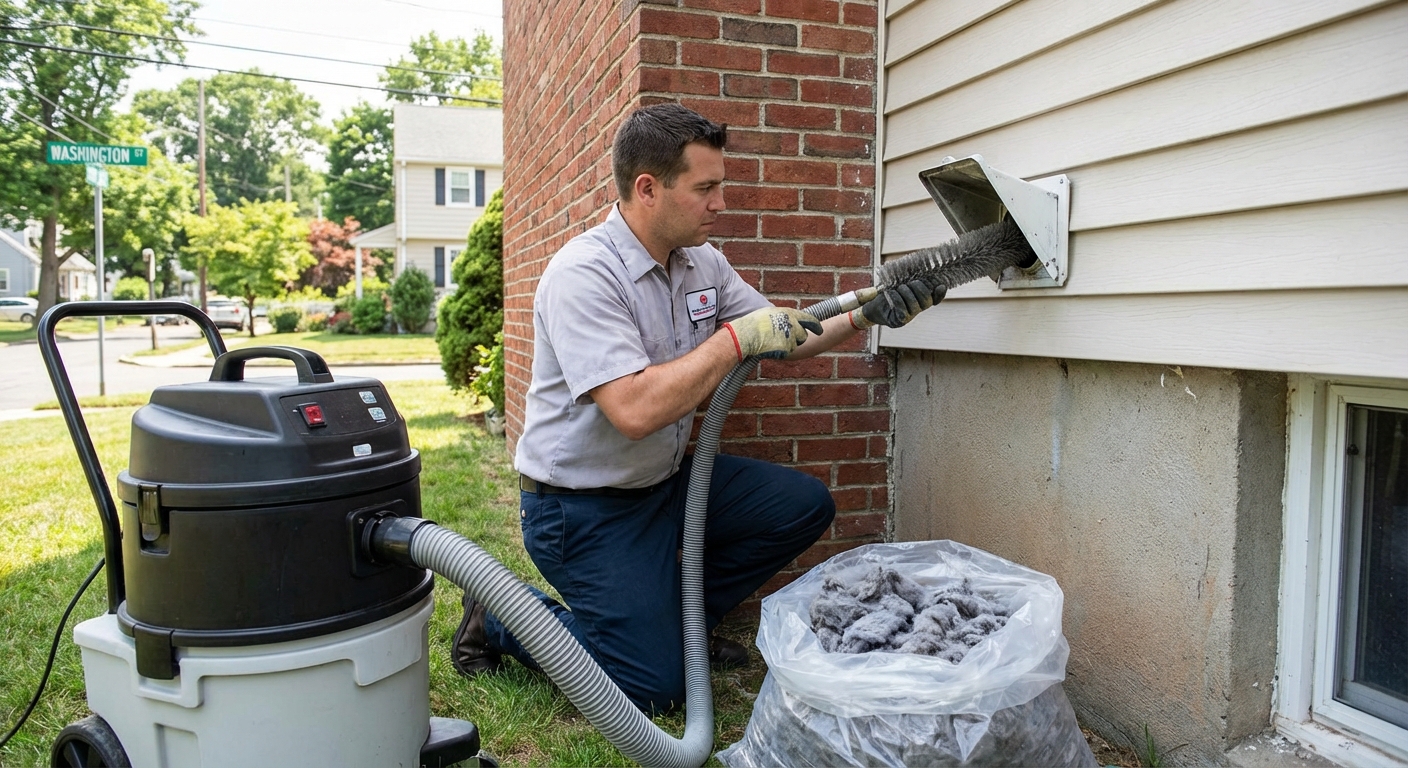
Reaching every section of a long vent run takes more than a quick brush. We disconnect the dryer, inspect the vent line, and look for damage or loose connections. Then, using specialized tools, we break up clogs and pull out every bit of lint. Our vacuums capture debris so your home stays clean, and we finish by testing airflow to confirm the job’s done right.
- Rotating Brush Systems: These tools scrub lint from deep inside long or twisting vents.
- High-Powered Vacuums: Lint and debris get pulled out and contained, not scattered around your laundry room.
- Airflow Testing: We check before and after cleaning to make sure the vent is fully open.
- Vent Hood Checks: Outside vents get inspected for blockages, damage, or nests that could cause future trouble.
Homes with vents longer than fifteen feet or with multiple bends need this level of cleaning at least once a year. Shorter vents can go a bit longer, but regular checks keep things running smoothly. We’ve seen vents so packed with lint it took hours to clear. Waiting only makes the job tougher and the risk higher.
How We Keep Dryers Safe All Year
Routine cleaning keeps clogs, fires, and costly repairs at bay. Most dryers need vent service once a year, but heavy use or long vent runs call for more frequent attention. Staying on top of maintenance means faster drying, lower energy bills, and a longer-lasting machine.
Between visits, clean the lint filter after every load and check the outside vent hood a few times a year. If you spot any warning signs, don’t put it off. We’re ready to help with local dryer vent cleaning that keeps your home safe and your dryer working the way it should.
Let's Get Your Dryer Vent Cleared Out
Clogged dryer vents don't fix themselves. The longer you wait, the bigger the risk. Call Fresh Air LLC at 203-424-8732 or Get a Free Quote to get your vent cleaned and your dryer running safely again.