Dryer Taking Too Long to Dry Clothes in Norwalk?
Most homeowners think a slow dryer is just annoying. Load after load, waiting around, checking the timer. But what you're really dealing with is wasted energy, higher bills, and a machine that's screaming for attention. Dryers don't just slow down for no reason—there's always a cause. And if you ignore it long enough, that cause turns into a bigger problem. Maybe a fire hazard. Maybe a dead appliance. Either way, you're paying for it.
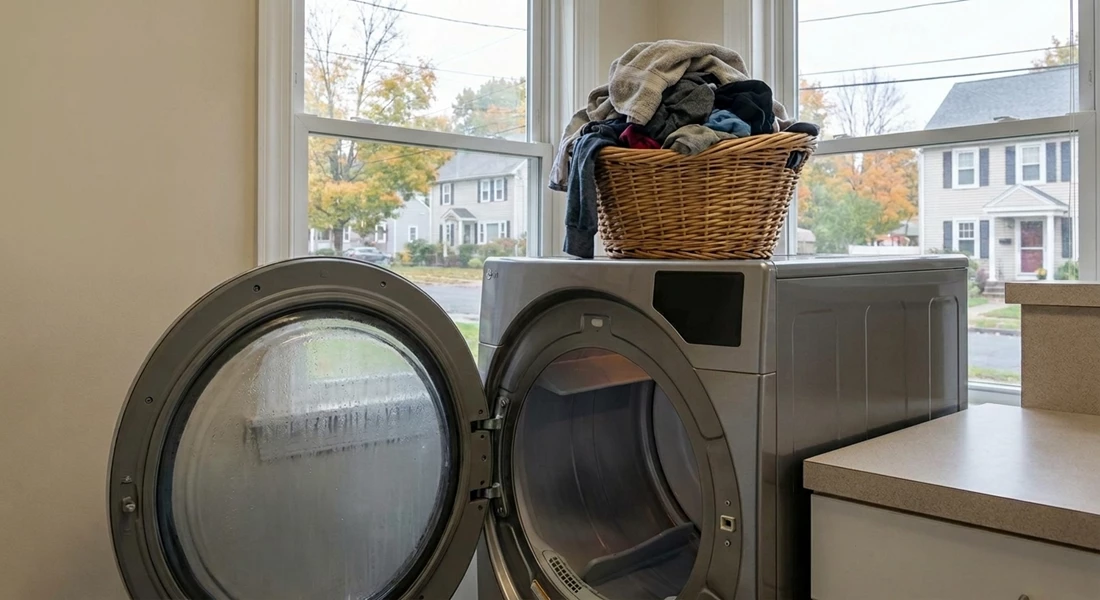
So here's what matters. If your dryer in Norwalk is dragging its feet, you need to figure out why—and fast. Every extra cycle you run is money down the drain. Every ignored warning sign is a repair bill waiting to happen. And every assumption that "it'll fix itself" is just wishful thinking dressed up as a plan.
Lint Buildup Chokes Everything
The lint trap isn't optional maintenance. It's the first line of defense against a dryer that can't breathe. When lint piles up, airflow drops. When airflow drops, drying times climb. And when drying times climb, you start running two or three cycles just to finish one load.
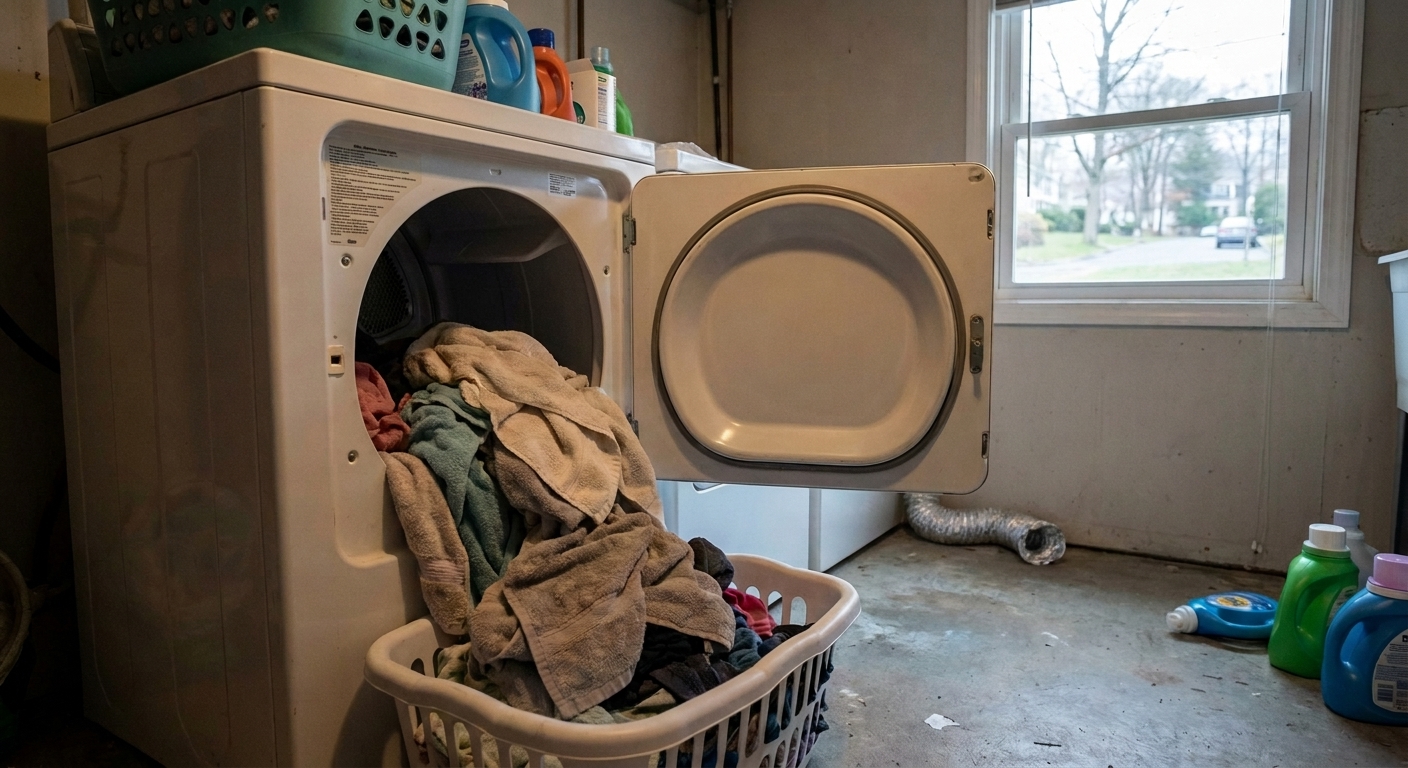
But the trap itself is only part of the equation. Lint doesn't just sit there—it migrates. It works its way into the vent hose, the exhaust duct, even the blower housing. Over time, that buildup creates a bottleneck. Your dryer works harder, heats less efficiently, and still leaves your clothes damp. Clean the trap after every load. Inspect the vent line twice a year. If you can't remember the last time you did either, start now.
Vent Blockages Are Silent Killers
Your dryer vent isn't just a tube—it's the escape route for hot, moist air. When that route gets clogged, everything backs up. Drying times double. Energy costs spike. And in the worst cases, trapped heat ignites the lint you didn't know was there.
Norwalk's coastal humidity doesn't help. Moisture in the air makes it harder for your dryer to expel what it's trying to remove from your clothes. Add a kinked or crushed vent hose to the mix, and you've got a system that's fighting itself. Disconnect the hose. Check for bends, tears, or blockages. Run a vent brush through the ductwork. If the exterior vent flap doesn't open when the dryer runs, something's in the way. Professional dryer vent cleaning can address blockages that DIY methods can't reach.
Overloading Guarantees Poor Results
Stuffing the drum full might save time upfront, but it costs you on the back end. Clothes need room to tumble. When they're packed tight, hot air can't circulate. Moisture gets trapped in the center of the load, and the dryer keeps running—long past when it should've stopped.
Here's what happens when you overload:
- Uneven drying—some items come out scorched, others still wet
- Increased wear on the drum belt and motor
- Higher energy consumption per load
- Wrinkled, tangled laundry that needs another round
- Strain on moisture sensors that can't read conditions accurately
Heating Elements Fail Without Warning
If your dryer runs but doesn't get hot, the heating element is the likely suspect. These components don't last forever. They burn out, crack, or corrode—especially in older units. And when they go, your dryer becomes nothing more than an expensive fan.
Testing the element requires a multimeter and some basic electrical knowledge. If you're not comfortable with that, don't guess. A faulty element won't fix itself, and running the dryer without heat just wastes time. Replacement parts are available, but installation varies by model. Some are straightforward. Others require disassembly and rewiring. Know your limits before you dive in.
Moisture Sensors Stop Sensing
Modern dryers rely on sensors to detect when clothes are dry. These sensors sit inside the drum, usually near the lint trap, and measure moisture levels in real time. When they work, they're efficient. When they fail, your dryer either shuts off too early or runs indefinitely.
Sensors get coated with residue from fabric softeners and dryer sheets. That buildup creates a barrier, preventing accurate readings. The fix is simple—wipe the sensor bars with rubbing alcohol and a soft cloth. Do this monthly. If the sensors are corroded or damaged, they'll need replacement. Ignoring sensor issues means guessing when your laundry is actually dry, and that's a losing game.
Thermostats and Fuses Keep Things in Check
Your dryer has multiple safety devices designed to prevent overheating. Thermostats regulate temperature. Thermal fuses cut power if things get too hot. When these components fail, your dryer either won't heat at all or cycles on and off unpredictably.
Common thermostat and fuse problems include:
- Blown thermal fuse from restricted airflow
- Cycling thermostat stuck in the open position
- High-limit thermostat tripping repeatedly
- Faulty wiring connections causing intermittent failures
- Corrosion on terminals reducing conductivity
Drum Seals and Rollers Wear Down
The drum doesn't just spin—it rides on rollers and seals that keep it aligned and stable. Over time, these parts wear out. Seals crack and let air escape. Rollers flatten and create drag. When that happens, the drum doesn't turn smoothly, and airflow suffers.
You'll hear the warning signs before you see them. Squealing, thumping, or grinding noises mean something's off. If the drum wobbles or feels loose, the support system is compromised. Replacing rollers and seals isn't complicated, but it does require disassembly. If you're not mechanically inclined, this is where a pro makes sense.
Humidity Makes Everything Harder
Norwalk sits close enough to the coast that humidity plays a role year-round. When the air outside is already saturated, your dryer has to work harder to expel moisture. That's not a defect—it's physics. But it does mean longer drying times, especially during summer months or after rain.
You can't control the weather, but you can control your dryer's environment. Make sure the vent exhausts outside, not into a garage or crawl space. Keep the laundry room well-ventilated. Run the dryer during cooler parts of the day when humidity drops. Small adjustments add up. Understanding why clean dryer vents matter can help you maintain optimal performance year-round.
When DIY Stops Making Sense
A qualified technician can:
- Diagnose electrical issues you can't see
- Test components with proper tools
- Replace parts correctly the first time
- Identify safety hazards before they escalate
- Provide a clear estimate without upselling unnecessary repairs
Prevention Beats Panic Every Time
Most dryer problems don't appear overnight. They build slowly—lint accumulates, parts wear, sensors drift. The difference between a minor fix and a major expense is usually just attention. Clean the lint trap after every load. Inspect the vent hose quarterly. Wipe down moisture sensors monthly. Schedule a professional cleaning annually.
These aren't suggestions—they're the baseline for keeping your dryer functional. Skip them, and you're gambling with your time, your money, and your safety. Stick with them, and your dryer will do what it's supposed to do: dry your clothes efficiently, without drama, and without making you wait around for hours wondering why it's still running. If you're experiencing persistent issues, learning how to fix stuffy air and improve ventilation can complement your dryer maintenance efforts.
Stop Waiting and Start Fixing
A dryer that takes too long isn't just inconvenient—it's a signal. Something's wrong, and it's not going to improve on its own. Whether it's a clogged vent, a failing element, or just years of neglected maintenance, the solution starts with action. Clean what needs cleaning. Replace what's broken. And if you're not sure what's causing the problem, bring in someone who is. Exploring what to expect during professional cleaning can help you understand the value of expert service. Your laundry—and your wallet—will thank you.
Let’s Get Your Dryer Back on Track
We know how frustrating it is to deal with a dryer that just won’t cooperate. Let’s put an end to wasted time and high energy bills together. If you’re ready for a real solution, give us a call at 203-424-8732 or Get a Free Quote and let’s make sure your laundry routine runs smoothly again.
‹ Back
Recent Posts
-

What Greenwich Homeowners Should Know About Dryer Vent Routing
October 14, 2026
-
Why Fairfield Families With Pets Need Cleaner Air Ducts
September 30, 2026
-
How Renovation Projects Can Leave Dust Inside Your Ducts
September 16, 2026
-
Why Lint Builds Up Faster Than Most Homeowners Expect
September 2, 2026
-
Can Dirty Air Ducts Affect New Homeowners in Greenwich
August 19, 2026