What to Do When Your Laundry Room Gets Hot in Norwalk
Most homeowners think a hot laundry room is just an inconvenience. Sweat through a load or two, deal with it, move on. But heat buildup isn't just uncomfortable — it's a sign something's off. Whether it's poor airflow, overworked appliances, or a room that was never designed to handle the thermal load, ignoring it won't make it better. And in Norwalk, where summer temps climb fast, a laundry room without proper ventilation can turn into a safety risk.
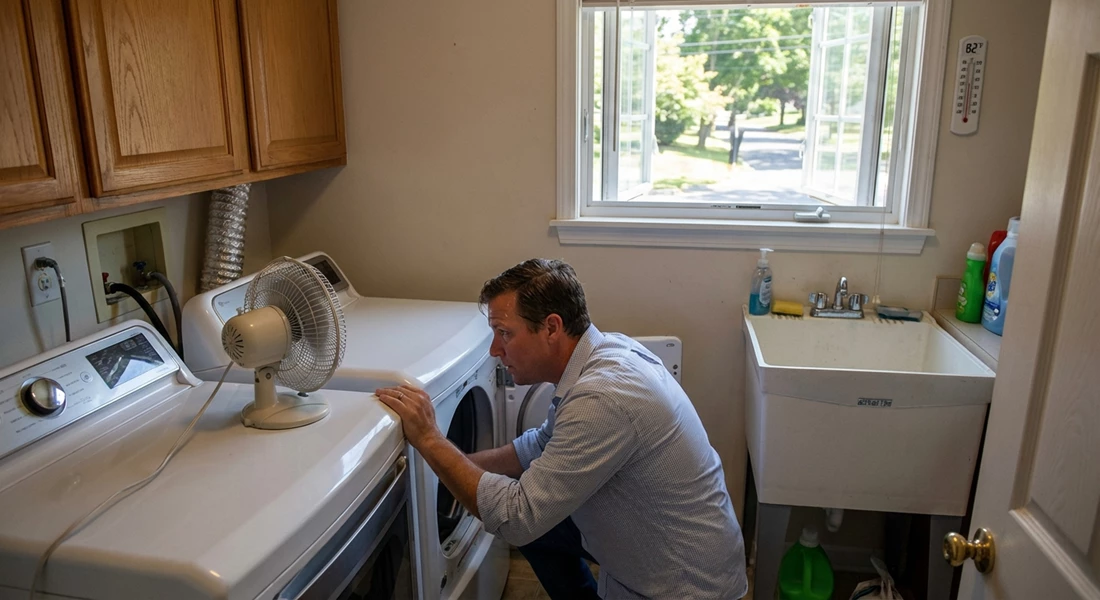
So here's the reality. If your laundry space feels like a sauna every time you run a cycle, that's not normal. Every degree matters. Every vent should be clear. And every fix you make should be grounded in how heat moves — not just how the room looks when the machines are off.
Appliances Generate More Heat Than You Think
Your dryer is the biggest offender. It's pulling moisture out of fabric and venting hot air — or trying to. When that system gets clogged or restricted, the heat has nowhere to go. Washers contribute too, especially during hot water cycles or high-speed spins. Combine both machines running at once, and you've got a thermal problem that compounds fast.
The issue gets worse when the room is small or tucked into a corner with no exterior access. Heat doesn't just disappear. It builds. And if your laundry room shares a wall with living space or sits above a garage, that warmth spreads. You're not just dealing with discomfort — you're dealing with energy waste and potential appliance strain.
Ventilation Fixes Most of the Problem
We've seen it over and over. The dryer vent gets ignored until something breaks. Lint piles up, airflow drops, and the machine works twice as hard to do half the job. That's when temperatures spike. Cleaning the vent isn't optional — it's baseline maintenance.
But ventilation goes beyond the dryer. If your laundry room has a window, crack it open during cycles. If it doesn't, install an exhaust fan that pulls hot air out and pushes it outside. Passive airflow won't cut it when you're running high-heat appliances in a confined space. You need active circulation, and you need it moving in the right direction.
Timing Your Loads Makes a Difference
Running laundry at noon in July is a choice — and not a smart one. Early mornings and late evenings are cooler, both inside and out. That means your appliances aren't fighting against ambient heat, and your laundry room stays more manageable.
Staggering your washer and dryer cycles helps too. Don't run them back-to-back if you can avoid it. Let the room cool between loads. And if you've got the option to air-dry, take it. Line drying or using a rack eliminates dryer heat entirely and cuts down on energy use.
Older Machines Work Harder and Run Hotter
If your dryer is more than a decade old, it's probably inefficient. Older models don't regulate heat as well, and they lack the sensors that newer units use to stop cycles early. That means longer run times, more heat output, and higher utility bills.
Upgrading to an energy-efficient model pays off in more ways than one. Look for dryers with moisture sensors, auto-shutoff features, and ventless options if your setup allows it. Ventless dryers use condensation or heat pump technology, which keeps the heat inside the machine instead of dumping it into your laundry room.
Seal Gaps and Insulate Where It Counts
Heat doesn't just come from your appliances. If your laundry room is on an exterior wall or in a garage, outdoor temperatures can bleed through. Check for gaps around doors, windows, and baseboards. Weatherstripping and caulk are cheap fixes that make a real impact.
Insulation matters too. If the walls or ceiling are uninsulated, you're letting heat transfer freely. Adding insulation — especially in a garage laundry setup — keeps the room cooler in summer and warmer in winter. It's not glamorous, but it works.
Bring in Cooling Support When You Need It
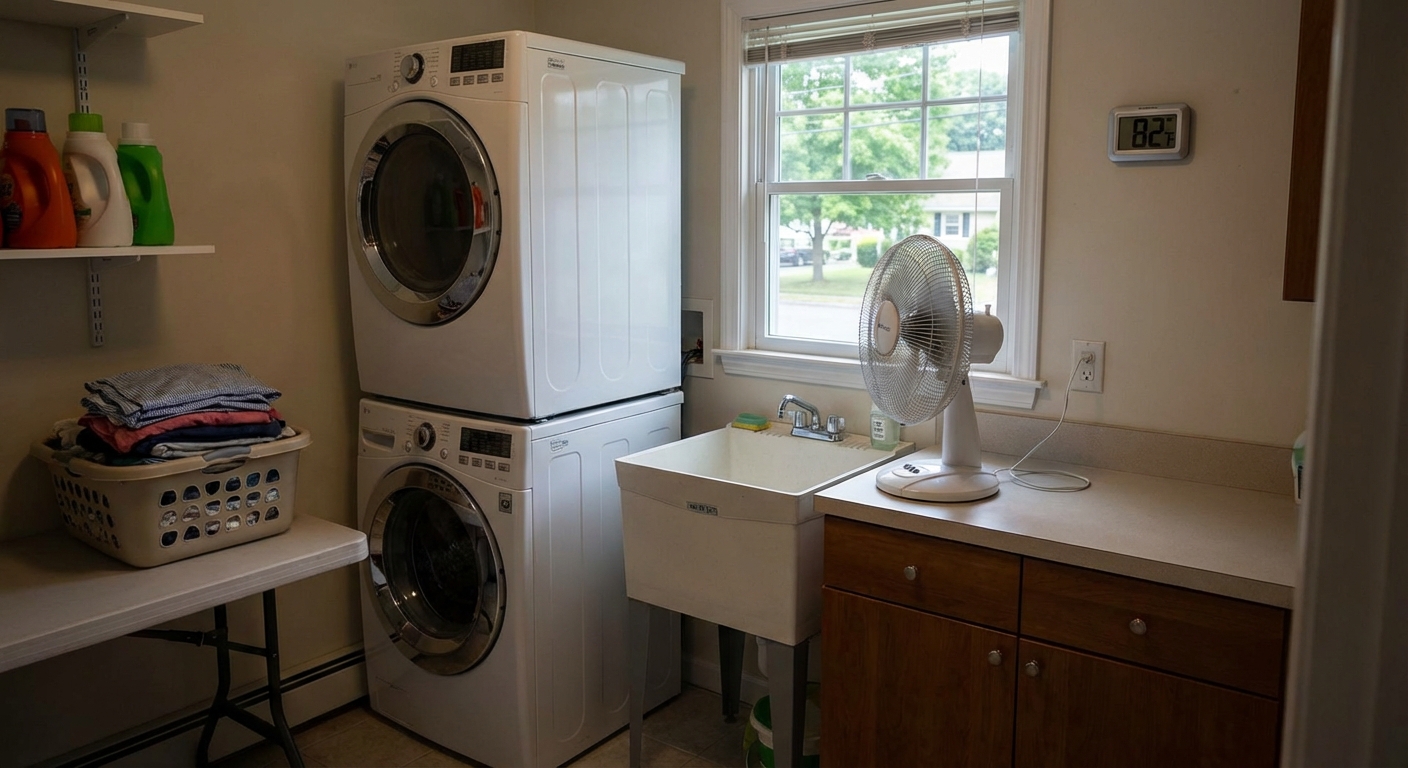
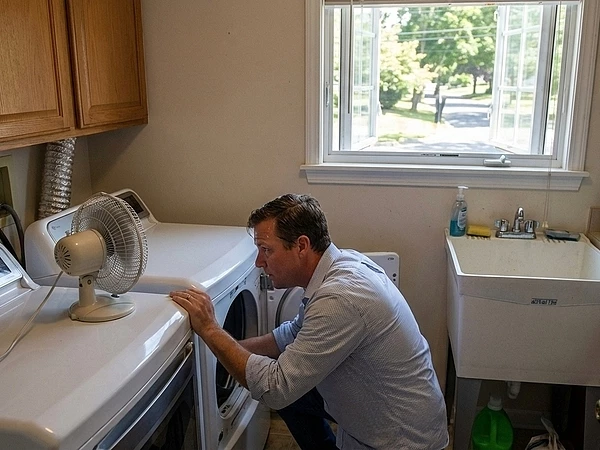
Sometimes ventilation and insulation aren't enough. If your laundry room still runs hot, consider a portable air conditioner or a high-velocity fan. A portable AC unit can drop the temperature fast, but you'll need to vent it properly to the outside. Otherwise, you're just recirculating warm air.
Fans are a simpler option. A box fan in the doorway or a ceiling-mounted unit can keep air moving and prevent heat from settling. It's not a permanent fix, but it's effective when you're mid-cycle and need relief.
Keep the Door Open During Cycles
Closing the laundry room door traps heat. Opening it lets that warmth disperse into the rest of the house, where it's easier to manage. If you're worried about noise or aesthetics, install a louvered door. It allows airflow while still giving you some separation.
This is especially important if your laundry room is small or lacks a window. Without an exit path, heat has nowhere to go. And when it builds up, it stresses your appliances and makes the space unbearable.
Maintenance Prevents Bigger Problems
A clogged lint trap isn't just a fire hazard — it's a heat trap. Clean it after every load. Check the dryer vent line every few months. Look for kinks, blockages, or disconnected sections. If the vent run is long or has multiple bends, consider having it professionally cleaned.
Your washer needs attention too. Check hoses for leaks, clean the filter if it has one, and make sure the machine is level. A washer that vibrates excessively or runs loud is working harder than it should, and that extra effort generates heat.
What We've Seen Work in Norwalk Homes
We've helped homeowners across Norwalk tackle laundry room heat issues, and the solutions are usually straightforward. Most of the time, it's a combination of better ventilation, smarter appliance use, and a few targeted upgrades. The homes that stay coolest are the ones where maintenance is consistent and airflow is prioritized.
Here's what makes the biggest impact:
- Clean dryer vents and lint traps religiously
- Run laundry during cooler parts of the day
- Install an exhaust fan if the room lacks one
- Seal gaps around doors and windows
- Upgrade to energy-efficient appliances when possible
When to Call in a Professional
If you've tried the basics and your laundry room is still overheating, it's time to bring in a pro. An HVAC technician can assess airflow, check ductwork, and recommend ventilation upgrades. An appliance repair specialist can inspect your washer and dryer for inefficiencies or malfunctions.
Here's when professional help makes sense:
- Your dryer takes multiple cycles to dry a single load
- The room stays hot even when appliances are off
- You smell burning or notice unusual noises
- Ventilation improvements haven't made a difference
- Your appliances are old and running inefficiently
Small Fixes Add Up to Real Comfort
A hot laundry room isn't something you have to live with. The fixes are manageable, the upgrades are worth it, and the payoff is immediate. You'll spend less time sweating through chores, your appliances will run more efficiently, and your home will be safer overall.
Here's the short list of what works:
- Improve ventilation with fans or exhaust systems
- Clean vents and filters regularly
- Time your laundry for cooler hours
- Seal and insulate the space
- Upgrade to modern, efficient appliances
Don't Let Heat Win
Laundry rooms take a beating. They're small, they're packed with heat-generating machines, and they're often the last space homeowners think about upgrading. But when the temperature climbs and the room becomes unbearable, it's a problem worth solving. The tools are there. The fixes are proven. And the difference is real.
In Norwalk, where summer heat is a given, your laundry room doesn't have to suffer. A few smart moves — better airflow, cleaner vents, smarter timing — and you're back in control. No more sweating through loads. No more wondering if your dryer's about to quit. Just a cooler, safer, more efficient space that actually works the way it should.
Let’s Make Your Laundry Room Comfortable Again
We know how frustrating it is to deal with a laundry room that feels like an oven, especially when you’ve tried all the usual fixes. Let’s work together to create a space that’s cool, efficient, and safe for your family. If you’re ready for real solutions, give us a call at 203-424-8732 or schedule an appointment and let’s get your laundry room back on track.
‹ Back
Recent Posts
-
How Renovation Projects Can Leave Dust Inside Your Ducts
September 16, 2026
-
Why Lint Builds Up Faster Than Most Homeowners Expect
September 2, 2026
-
Can Dirty Air Ducts Affect New Homeowners in Greenwich
August 19, 2026
-

Why Some Fairfield Homes Have Hot and Cold Spots
August 5, 2026
-
What to Do When Your Laundry Room Gets Hot in Norwalk
June 17, 2026